Why Stretch Jeans Bag Out at the Thigh by Lunchtime
Quick Answer: Stretch denim is mostly cotton with a small amount of elastane. Elastane returns to shape; cotton yarns permanently elongate when stretched repeatedly. Where the fabric is stretched most — across the thighs and seat — the cotton deforms first, and the elastane can no longer pull the now-longer yarns back. That is why jeans that fit at 8am look loose and baggy at the thigh by lunch, and why the effect gets worse each wear.
They fit in the shop. They fit this morning.
By two o’clock they have a knee bag, a slack thigh, and a waistband that has given up.


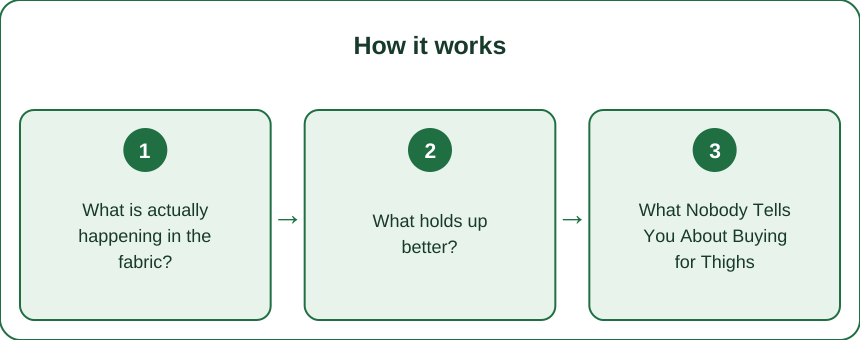
What is actually happening in the fabric?
Two materials with completely different recovery behaviour, working against each other.
Elastane, typically 1-3% of stretch denim, is genuinely elastic. It deforms and returns, thousands of times, which is what gives the fabric its stretch and its comfort.
Cotton is not elastic. Cotton yarns have some give from the twist and the weave, and beyond a certain point they undergo permanent plastic deformation. Once a cotton yarn has been elongated past its recovery limit, it stays longer.
The thigh is where this happens fastest, because it is the area under the most sustained tension in the most positions. Sitting, in particular, applies a large amount of stretch across the thigh and seat and holds it there for long periods, which is precisely the condition that produces permanent deformation rather than temporary.
The elastane then makes it worse in a specific way. It keeps trying to recover, so the fabric still has stretch — it just now has more length to work with. The result is a garment that feels stretchy and looks slack, which is the specific complaint about mid-life stretch jeans.
More elastane accelerates it. Fabrics with 3-5% elastane are more comfortable initially and bag out considerably faster, because the elastane allows more stretch, which means more cotton deformation per wear. The comfortable jean is the one that fails first.
What holds up better?
Rigid or nearly-rigid denim, with a specific caveat about how it fits.
100% cotton rigid denim does not bag out, because there is no elastane encouraging it to stretch further than the weave allows. It does stretch — a rigid jean typically gains 2-5cm at the waist and thigh over the first few wears — and then it stabilises. It relaxes to a shape and stays there.
This is the important distinction: rigid denim stretches once and settles; stretch denim stretches continuously and degrades. For anyone whose thighs are the widest point of the garment, that difference determines whether jeans last a season or three years.
Low-stretch denim, around 1% elastane, is the practical middle ground. Enough give to be comfortable through the thigh, little enough that the cotton deformation is slow.
Fabric weight matters as much as composition. A heavier denim, 12oz and above, has more yarn substance and resists deformation far better than a lightweight 9oz stretch fabric. Lightweight stretch denim is the fastest-failing combination there is.
And the weave matters. Ring-spun denim, with its slightly irregular yarn, generally holds shape better than open-end spun. It is also what most quality denim is made from, which is part of why the price difference translates into longevity.
The trade-off is honest: rigid denim requires a proper break-in period and is genuinely stiff at first, and it must be bought to fit the thigh with the understanding that it will relax. That is a real cost, and the reward is a jean that still fits in year two.

What Nobody Tells You About Buying for Thighs
Buy for the thigh and alter the waist — always. This is the single most useful rule in denim shopping for anyone with a thigh-to-waist ratio outside the fit model’s. Taking in a waistband is a routine, inexpensive alteration. Letting out a thigh is essentially impossible.
The resulting waist gap is a solved problem. Every alterations shop takes in a waistband, usually through the centre back seam, for a modest sum. Budgeting for that as part of the purchase changes what you can buy.
Try them on sitting down, and stay sitting for two minutes. A jean that is comfortable standing and tight across the thigh seated is the one that will bag out fastest, because that seated tension is exactly what deforms the cotton.
Check the inner thigh seam construction. A flat-felled seam is far more durable than a plain overlocked one, and the inner thigh is where friction wear starts for most people. This single detail is a good predictor of how long a pair will last.
Wash cold and hang dry to slow the decline. Heat is what degrades elastane, and a tumble dryer is the fastest way to kill the recovery in stretch denim. Cold wash, inside out, hung to dry, will meaningfully extend the life of a pair.
A hot wash restores some shape temporarily — which is why jeans feel tight after washing and then loosen again. That is not the fabric recovering; it is cotton shrinking slightly and then re-stretching. Relying on it accelerates the underlying problem.
And know that the sizing chart is the wrong tool. Waist measurement tells you nothing about thigh circumference, and the relationship between the two varies enormously between brands. The brands that publish a thigh measurement are worth being loyal to for that reason alone.
How should this change what you buy going into autumn?
The season actually makes this easier, which is worth taking advantage of.
Autumn is rigid denim weather. Heavier weights that are unbearable in August are genuinely comfortable in October, which means the season is the right time to buy the fabric that lasts. Buying rigid denim in a heatwave is what puts people off it.
Layering underneath changes the fit calculation. Thermal leggings or thicker tights under jeans in deep winter add real circumference at the thigh. A jean bought to fit precisely in September may be uncomfortable in January, and it is worth knowing which of your pairs are the winter ones.
Boots change the leg opening requirement, and for anyone with fuller thighs the leg shape below the knee is what balances the silhouette. A straight or slightly flared leg over a boot reads better and is more comfortable than a skinny fighting the boot shaft.
Buy the break-in period now. Rigid denim needs a few weeks of regular wear to mould, and starting that in September means they are properly comfortable by the time the weather actually demands them.
And do the honest audit of what you own. Stretch jeans that have already bagged out will not recover, and no amount of washing brings them back. Wearing them and being irritated daily is a worse outcome than deciding they are now weekend jeans and buying one good pair. For most people the useful denim wardrobe is two or three pairs that fit, rather than seven that mostly do not.
FAQ: Stretch Denim and Thigh Fit, Answered
Can baggy stretch jeans be fixed?
Not really. A tailor can take in the side seams, which changes the fit but not the fabric — the deformed cotton is still deformed, and the newly taken-in areas will bag out again. It can be worth doing for an expensive pair with plenty of life left elsewhere, and it is not a permanent fix.
Is it worth paying more for denim?
For this specific problem, generally yes, because the price difference usually buys heavier fabric, ring-spun cotton and better seam construction — the three things that determine whether a pair holds its shape. It is one of the clearer cases where cost correlates with longevity rather than only with branding.
How much stretch should I look for?
One to two percent elastane is the sweet spot for comfort and durability together. Zero is the most durable and requires a break-in. Three percent and above is the most comfortable in the shop and the fastest to bag out, which is exactly the trap — the pair that feels best on the day is usually the pair that will disappoint you soonest.
TL;DR:
- Elastane recovers and cotton does not — the thigh is where the cotton yarns permanently elongate first, and the elastane then has more length to work with.
- More elastane means faster failure, and lightweight stretch denim is the shortest-lived combination there is.
- Rigid denim stretches once and settles; 1-2% elastane at 12oz or heavier is the durable practical choice.
- Buy for the thigh and have the waist taken in, try them on seated for two minutes, and check for a flat-felled inner seam.
- Wash cold, hang dry, never tumble — heat kills the elastane recovery fastest.
The frustrating part of this problem is that the fitting-room experience actively selects for the jeans that will fail. The pair that feels wonderful the first time you put them on is the one with the most stretch, and the most stretch is the mechanism of the failure. Buying the slightly stiffer pair is a bet on the version of yourself who still wants to wear them in eighteen months.
Keep Reading
This article is for general informational and styling purposes only. Fit, sizing, and product availability may vary.
