Why the Inner Seam Wears Out First and What to Do About It
Quick Answer: The inner thigh takes repeated abrasion with every step, plus heat and moisture that soften fibres and accelerate wear. Thin, tightly-fitted or low-quality fabric fails there first, and elastane degrades faster than cotton under heat. Extend the life with denser fabric, correct fit (not too tight), cold washing, no tumble drying, and rotating garments rather than wearing one pair repeatedly.
Everything else looks new.
The inner thigh is see-through.
Because that patch has done thousands more rubs than any other part of the garment.

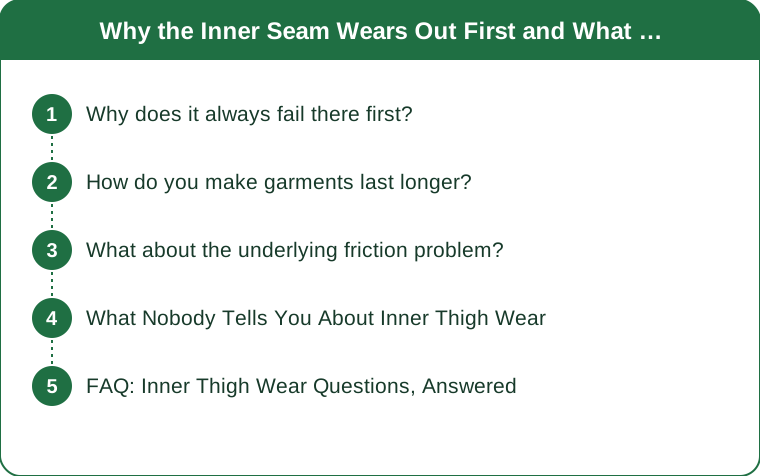
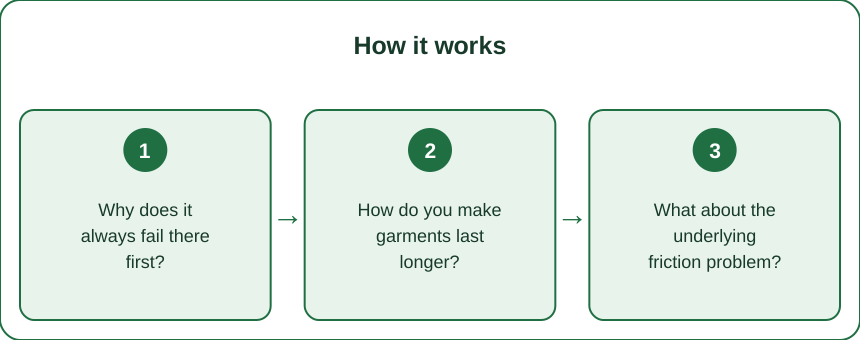
Why does it always fail there first?
Six factors that concentrate in one small area.
Friction is constant and cumulative. Every step brings the inner thighs into contact. Across a day of walking that is thousands of abrasion cycles in one spot, which no other part of a garment experiences.
Heat and moisture soften fibres. The inner thigh is warm and often damp. Fibres under tension, in heat and moisture, abrade considerably faster than dry cool ones. This is why the problem is markedly worse in summer and in humid conditions.
Tension makes it worse. Fabric stretched taut over the thigh has less give and takes the abrasion directly rather than sliding. A garment that fits tightly through the thigh will fail there sooner than the same garment fitting comfortably.
Elastane degrades with heat. Tumble drying and hot washing break down elastane over time. Since elastane is what gives stretch fabric its recovery, its degradation shows up first where the fabric works hardest.
Seam construction concentrates stress. A flat inner seam distributes load better than a bulky one. A thick, raised seam creates a ridge that takes the abrasion and transmits it to the fabric either side.
And weave density matters more than fibre content. A tightly woven or knitted fabric resists abrasion far better than a loose one of the same fibre. This is largely invisible on a website, which is why the same stated composition performs very differently across brands.
How do you make garments last longer?
Six changes, and the laundry ones are the cheapest.
Wash cold and inside out. Heat degrades elastane and accelerates fibre breakdown. Cold water, inside out, on a gentle cycle meaningfully extends the life of the exact area that fails.
Never tumble dry. This is the single largest laundry factor. Tumble drying combines heat with mechanical abrasion, which is precisely the combination that kills the inner thigh. Hang drying costs nothing and adds months.
Rotate garments. Fibres recover between wears. Wearing the same pair three days running gives the fabric no recovery time, and the wear rate rises noticeably.
Fit slightly less tightly through the thigh. Not loose — just not stretched taut. Fabric that can move slides against itself rather than abrading in one place, and the difference in lifespan is substantial.
Choose denser fabric for high-wear garments. For leggings, 250gsm and above is meaningfully more durable than lightweight fabric. For denim, heavier weights last longer, though they are warmer.
Wash less often where you can. Denim in particular does not need washing every wear. Every wash cycle is an abrasion event, and spot cleaning between washes reduces the count.

What about the underlying friction problem?
Six approaches to the skin side of the same issue, which matters more in warm weather.
Anti-chafe balm or stick. Applied to the inner thigh, it reduces skin-to-skin and skin-to-fabric friction directly. Reapply for long days or long distances.
Shorts or bands under skirts and dresses. Fitted shorts, or dedicated anti-chafe bands, remove skin-to-skin contact entirely. Seamless versions avoid creating a new friction point.
Fabric choice for the base layer. Moisture-wicking synthetic reduces the dampness that softens skin and accelerates chafing. Cotton holds moisture, which is the wrong property here.
Address heat and moisture directly. Powder or a moisture-managing fabric reduces the sweat that makes both fabric wear and skin chafing worse. This is why the problem eases as autumn arrives.
Check the fit rather than the size. A garment that rides up between the thighs creates a bunching point that concentrates both friction and wear. A longer inseam on shorts — enough that the hem sits below the widest point of the thigh — solves it far better than a different size.
Repair early. Thin fabric can be reinforced with iron-on interfacing or a patch on the inside before it splits. Once there is a hole, the repair is visible; before that, it is invisible and lasts. This is general information, not medical advice — persistent broken skin, or a rash that does not resolve, deserves a professional look.
Seasonal note: the transition into autumn changes this in two directions. Skin chafing eases as sweat drops, but the switch to heavier trousers and tights brings a different friction profile — and tights in particular fail at the inner thigh faster than almost any garment. Rotating pairs matters more for tights than for anything else you own.
What Nobody Tells You About Inner Thigh Wear
Nobody tells you the tumble dryer is the main culprit. People blame quality, fit and body shape. Heat plus tumbling does more damage to that specific area than anything else in a garment’s life.
Nobody tells you that tighter is worse. The instinct is that a tighter fit means less movement means less friction. In practice, taut fabric takes the abrasion directly instead of sliding, and fails sooner.
Nobody tells you to rotate. Fibres, especially elastane, need recovery time between wears. Three pairs worn in rotation last considerably more than three times as long as one pair worn continuously.
Nobody tells you weave density beats fibre content. Two garments with identical composition labels can differ enormously in durability, and the difference is knit or weave density, which is almost never published.
Nobody tells you to reinforce before it fails. Iron-on interfacing on the inside of a thinning area is invisible, takes ten minutes and can double the remaining life of a garment you like.
Nobody tells you this is about physics, not your body. Inner thigh contact is normal and near-universal, and it is a design constraint that garment makers should be addressing rather than something to be solved by the wearer.
FAQ: Inner Thigh Wear Questions, Answered
Why does only the inner thigh wear out?
It takes thousands of abrasion cycles per day plus heat and moisture, which no other part of the garment experiences.
What is the single biggest thing I can change?
Stop tumble drying. Heat plus mechanical abrasion is the fastest route to a worn inner thigh.
Should I buy a tighter or looser fit?
Slightly less tight. Taut fabric takes abrasion directly; fabric with a little give slides instead.
What fabric weight should I look for in leggings?
250gsm and above is meaningfully more durable than lightweight fabric, and more opaque as a bonus.
Does rotating garments really help?
Yes, substantially. Elastane recovers between wears, and continuous wear accelerates its breakdown.
How do I stop skin chafing?
Anti-chafe balm, fitted shorts or bands under skirts, and moisture-wicking rather than cotton base layers.
Can I repair a thinning area?
Yes — iron-on interfacing on the inside, applied before it splits, is invisible and effective. After a hole appears, repairs show.
TL;DR:
- The inner thigh fails first from thousands of daily abrasion cycles plus heat and moisture.
- Never tumble dry, wash cold and inside out — the single biggest lifespan factor.
- Slightly less tight through the thigh lasts longer than taut fabric.
- Rotate garments so elastane recovers, and choose 250gsm+ for leggings.
- Reinforce with iron-on interfacing before it splits, not after.
Take the pair you wear most out of the tumble dryer rotation this week. It is the cheapest change on this list and the most effective.
See It in Motion
Seen here: High Waist 8” Yoga Shorts — shop similar styles on bubblelime.com
Keep Reading
This article is for general informational and styling purposes only. Fit, sizing, and product availability may vary.
